
Best overall for lean outbound teams
AiSDR
Best first autonomous pilot: $250 month to month with research, email, LinkedIn, calls, reply handling, booking, sending infrastructure, and HubSpot sync.
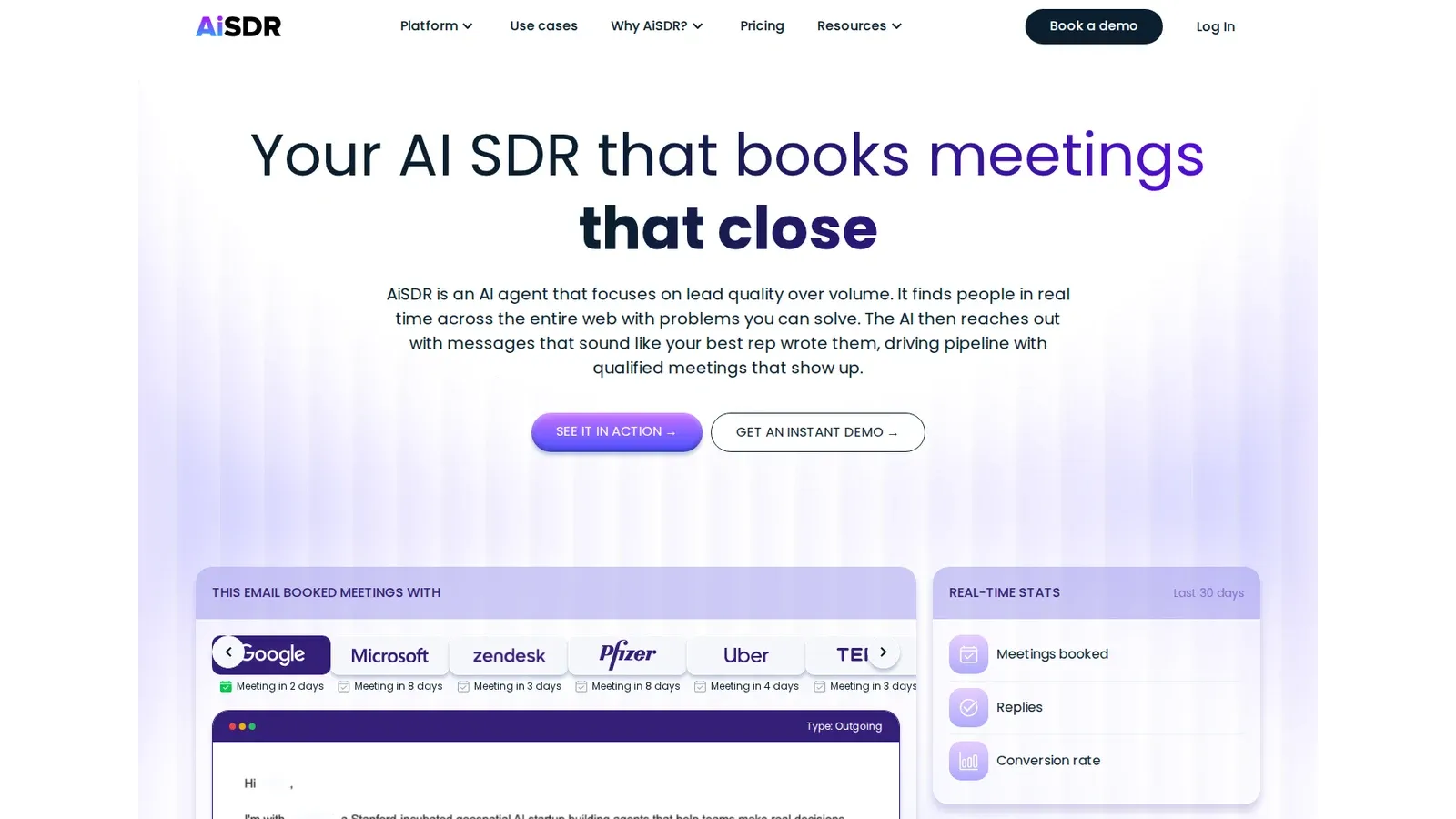
AiSDR is the strongest first autonomous pilot here. Solo combines 200 AI-researched contacts, one user, one domain, three mailboxes, one LinkedIn account, warmup, autonomous outreach, reply handling, meeting booking, and native HubSpot sync for $250 month to month.
Reply.io Jason covers more channels and offers clearer approval controls. AiSDR still ranks first because a lean team can validate targeting, message, deliverability, and meeting quality with half the starting spend and without an annual contract. That lower learning cost outweighs Jason’s maturity for this audience.
Choose this if: you have a defined ICP and message but lack execution capacity. Skip this if: 200 researched contacts cannot produce a meaningful test or you already own a mature outbound stack. Final verdict: AiSDR is the best low-commitment route into autonomous outbound.
Key tradeoff: The affordable Solo entry point is genuinely constrained; meaningful volume moves the budget from $250 to $900 or more per month.

Best for controlled multichannel automation
Reply.io Jason AI
Best mature multichannel option: broader channel coverage and explicit autopilot/copilot control, offset by a $500 annual entry point.

Reply.io Jason is the most capable multichannel product in this ranking. It sources and enriches prospects, runs adaptive email, LinkedIn, phone, SMS, and WhatsApp sequences, handles replies, and books meetings. Teams can use autopilot or require approval before messages and replies leave.
That breadth makes Jason the better operational product for a mature outbound team. It ranks second because the entry price starts around $500 per month billed annually and allowances vary by package; a new motion assumes more commitment before proving the audience and offer.
Choose this if: channel breadth, reply controls, and human approval matter more than the cheapest pilot. Skip this if: you have not validated outbound or cannot justify an annual package. Final verdict: Jason is the strongest controlled multichannel AI SDR, but not the safest first purchase.
Key tradeoff: Jason offers unusually broad channel coverage and control, but the package matrix is harder to price than a single flat subscription.

Best for established SDR teams
Regie.ai
Regie.ai is the operational choice for a staffed SDR team, not the budget choice for replacing one; its seat minimums and annual contracts make the economics enterprise-shaped.
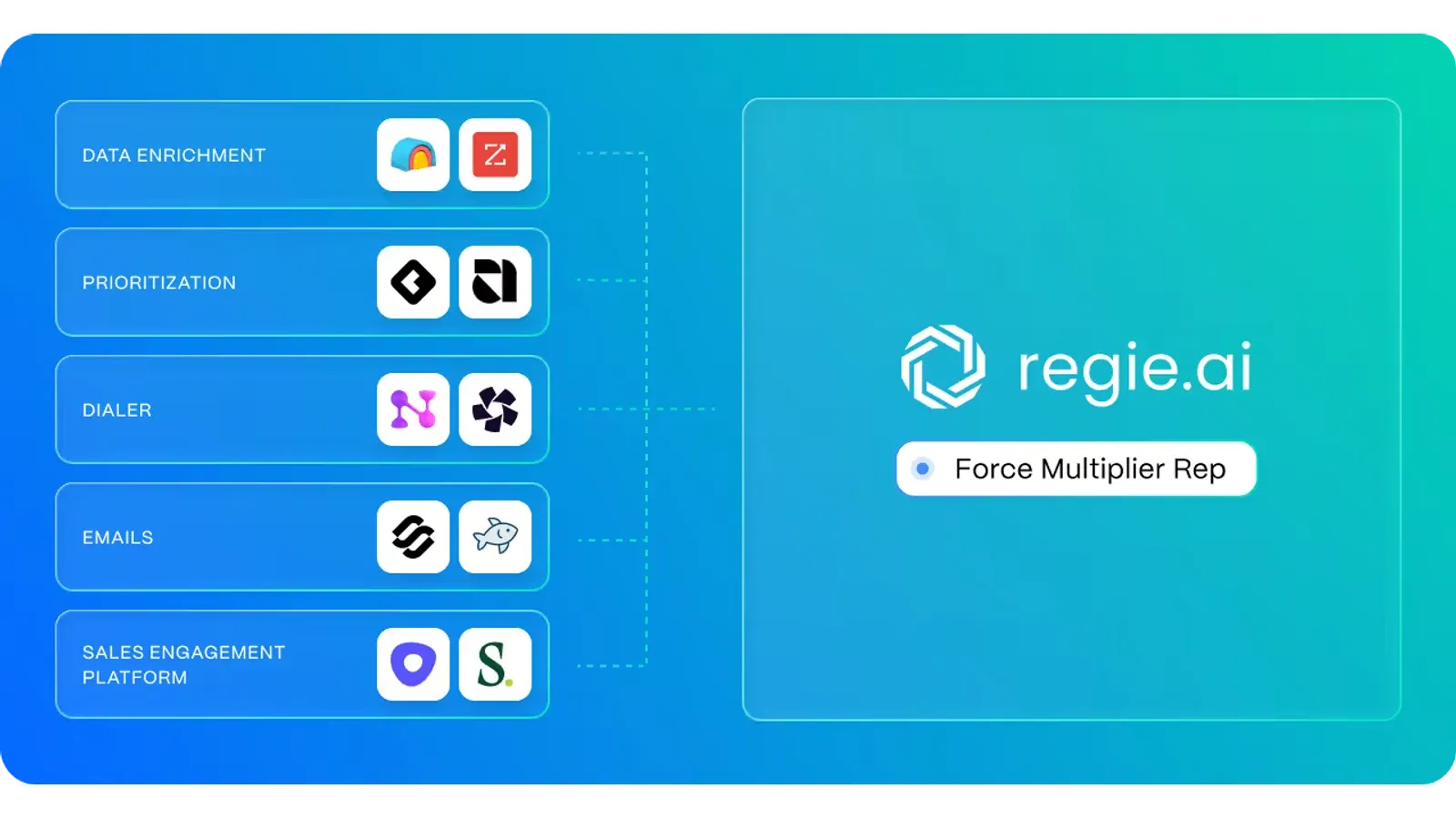
Regie.ai is designed for an existing prospecting organization. Its platform combines sequencing agents, intent prioritization, AI messaging, calling, social workflows, and CRM or sales-engagement integrations while keeping human reps central.
The $180 AI SEP carries a ten-seat minimum; the $499 Force Multiplier Rep plan carries a five-seat minimum. Both are annual, and mailbox rotation, data, and parallel dialing can add cost. The economics depend on replacing enough point tools and increasing rep coverage.
Choose this if: you already operate an SDR team and want AI to raise coverage without removing reps. Skip this if: you need a founder-sized pilot or a single autonomous worker. Final verdict: Regie.ai is the best fit for augmenting a staffed sales floor.
Key tradeoff: Regie.ai provides the deepest rep-plus-agent operating model here, but its seat minimums rule it out for small teams.

Best for managed high-volume outbound
11x Alice
11x makes sense when a team wants managed domains, warmup, CRM sync, and thousands of new prospects bundled together; it is excessive for an early experiment.

11x Alice packages prospecting as a managed digital-worker deployment with prospect data, mailboxes, domain setup, warmup, monitoring, autonomous replies, booking, CRM sync, and onboarding. Growth is sized for 2,000 new prospects per month.
This reduces vendor sprawl for a team that wants one provider accountable for infrastructure and execution. The tradeoff is a $3,750 monthly starting price billed through an annual Growth contract, or $45,000 for the first year.
Choose this if: you need managed high-volume autonomous outbound and can support a $3,750 monthly annual commitment. Skip this if: you want a small reversible test or already own the infrastructure. Final verdict: 11x is the managed scale option, for teams prepared for a $45,000 minimum annual commitment.
Key tradeoff: The bundle removes operational assembly work, but it commits the buyer to a high-cost managed system before proving channel fit.
Best for white-glove AI BDR rollout
Artisan Ava
Artisan stands out for rollout support and a broad bundled platform, but buyers cannot model value accurately until they receive a scoped quote.
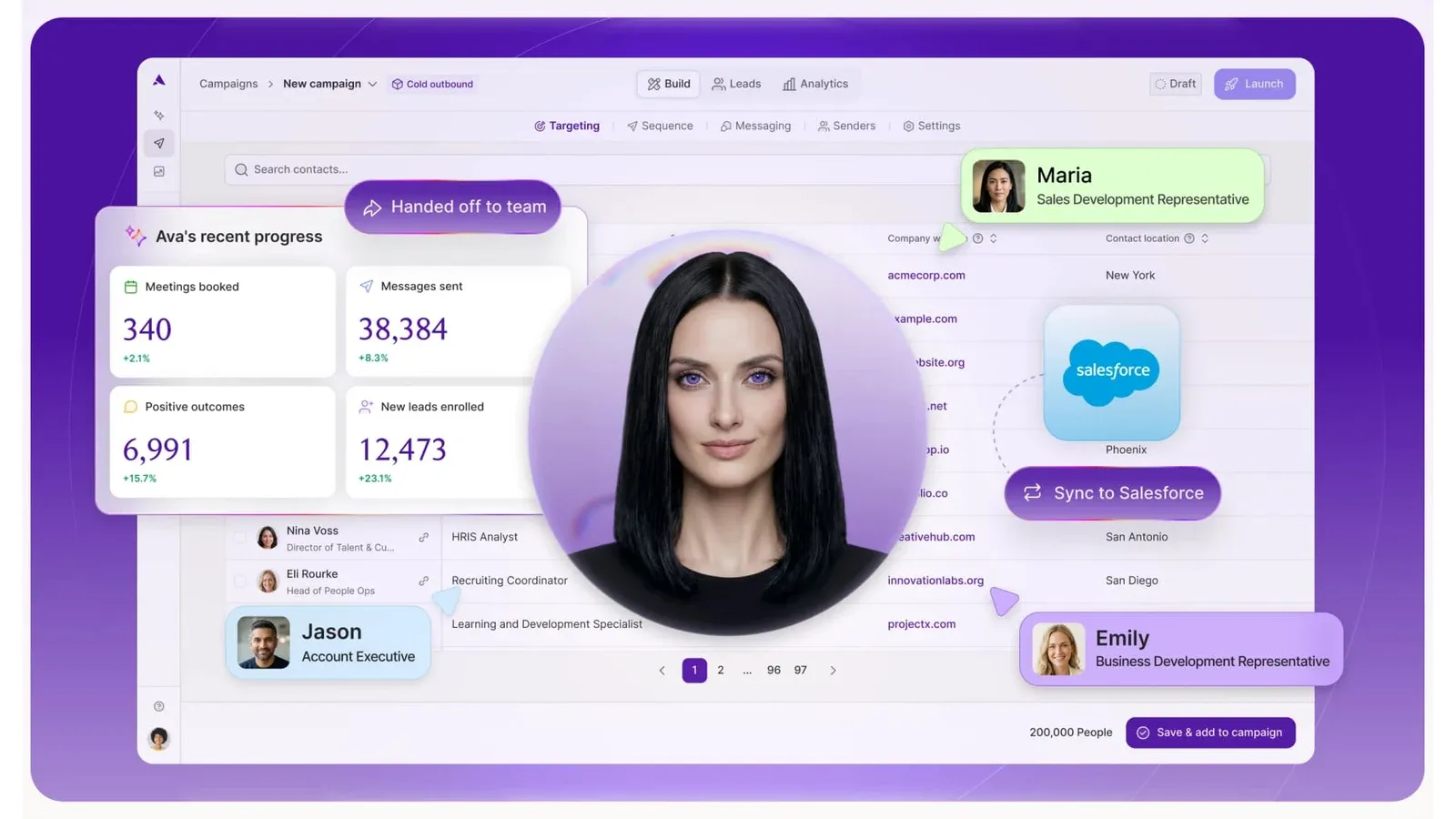
Artisan Ava combines autonomous outreach with onboarding and ongoing human support. Listed plans include campaign types, autonomous replies and meeting booking, contact data, HubSpot and Salesforce sync, plus customer-success help; the AI dialer is a paid per-seat add-on with no publicly disclosed price.
The service layer is the differentiator. Scale adds a dedicated success manager and CRM setup, while Enterprise adds a forward-deployed strategist and deeper rollout support. Pricing is a custom quote, and contract terms are negotiated during the sales process rather than publicly disclosed.
Choose this if: you have budget but lack an internal outbound or deliverability operator. Skip this if: transparent self-serve pricing and a reversible pilot matter most. Final verdict: Artisan is the white-glove implementation choice, not the value leader.
Key tradeoff: Artisan reduces implementation burden through human support, but quote-based pricing obscures the cost of each capability.

Best lower-cost AI-assisted alternative
Apollo
Apollo is an AI-assisted data and engagement platform, not a direct autonomous-AI-SDR substitute.
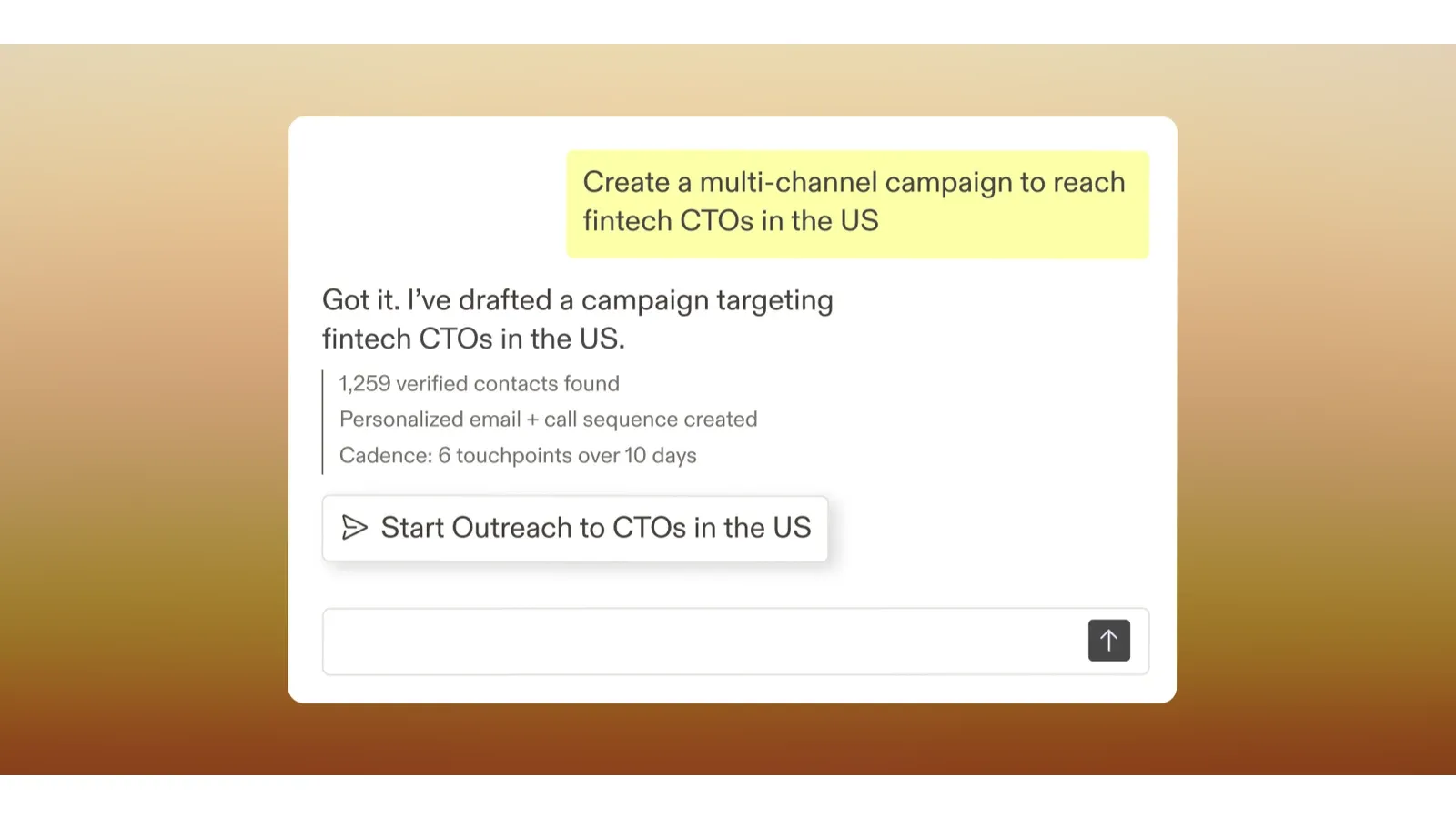
Apollo is included as an AI-assisted alternative, not a feature-for-feature autonomous AI SDR. It combines B2B data, account search, sequencing, research and personalization assistance, deliverability guidance, calling, workflows, and CRM integrations; humans remain responsible for supervising conversations and converting replies.
That distinction is useful for teams still learning their ICP or message. A free plan supports low-risk data and workflow evaluation, while paid plans add credits and capabilities. Buyers must model credit use, add-ons, dialer needs, and email-account rules.
Choose this if: you need a data-plus-engagement foundation and want AI to assist human operators. Skip this if: autonomous reply handling and end-to-end meeting booking are requirements. Final verdict: Apollo is the honest earlier-stage alternative, not a direct autonomous competitor.
Key tradeoff: Apollo is easier to pilot and cheaper to enter, but it does not remove as much human execution work.